

Description
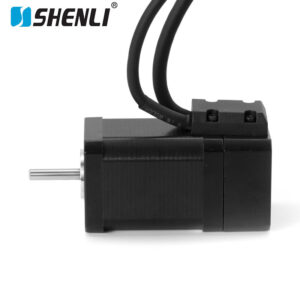
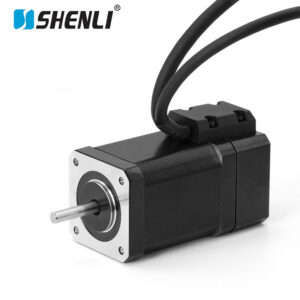
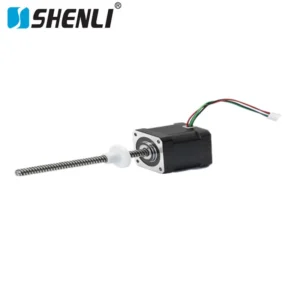
Nema17 Stepper Motor with Brake for Precision Motion Control
The Nema17 stepper motor with brake provides a compact motion control solution for precision positioning and industrial automation. By combining stepper motor control with an electromagnetic brake, it helps equipment manufacturers achieve controlled movement and secure holding when the brake engages.
Furthermore, the motor supports microstepping operation with compatible drivers, which can help reduce vibration and operating noise. Its compact form factor also makes it suitable for automation systems that require precise positioning within limited installation space.
High-Performance Design and Structural Advantages
The motor combines a high magnetic density rotor design with optimized winding technology to support torque output and electrical performance. As a result, equipment designers can evaluate it for applications that require responsive motion control and repeatable positioning.
In addition, the electromagnetic brake helps hold the motor shaft when engaged, subject to the brake’s rated holding torque and operating conditions. This function can support position retention during power loss or controlled shutdowns when the system uses a correctly specified brake and control circuit.
As a Nema17 stepper motor with electromagnetic brake for robotic systems, it offers a compact design for small automation equipment. Its rotor and winding characteristics influence acceleration, deceleration, and torque performance, so engineers should match the motor to the required speed, load, and motion profile.
Key design considerations include:
- Compact construction: Supports integration into space-constrained equipment.
- Microstepping compatibility: Helps improve motion smoothness when paired with a compatible driver.
- Electromagnetic braking: Provides shaft-holding capability when the brake engages.
- Motion control flexibility: Allows engineers to configure the motor for suitable positioning and automation tasks.
Manufacturing Quality and Operational Reliability
Motor construction and component quality directly affect operating stability. For this reason, the motor uses an aluminum alloy housing to support structural strength and heat dissipation. Meanwhile, copper windings help provide the electrical characteristics required for stepper motor operation.
The actual thermal performance depends on current settings, ambient temperature, mounting conditions, duty cycle, and heat transfer within the complete system. Therefore, equipment manufacturers should evaluate temperature rise under representative operating conditions before finalizing their design.
In addition, bearing quality and mechanical assembly influence rotational smoothness and noise. For applications with strict acoustic requirements, engineers should assess noise and vibration under the intended load and speed conditions.
To support supplier qualification, buyers should confirm which inspection and validation procedures the manufacturer performs. These may include:
- Electrical and winding checks
- Motor operation and load testing
- Brake engagement and holding performance tests
- Mechanical inspection and assembly verification
- Noise, vibration, and temperature evaluations, where specified
By reviewing the relevant test results and acceptance criteria, procurement teams can better determine whether the motor meets their equipment requirements.
Applications and Integration Capability
The Nema17 stepper motor with brake can support a range of compact motion control applications. Its suitability depends on the required torque, positioning accuracy, holding load, operating environment, and control architecture.
Typical applications for evaluation include:
- Medical equipment: Positioning mechanisms in compatible devices, subject to the equipment’s safety and regulatory requirements.
- Laboratory automation: Motion control in sample handling and other compact automated mechanisms.
- Precision positioning platforms: Controlled movement and shaft holding in positioning assemblies.
- 3D printers: Motion axes that require controlled movement and additional holding capability.
- Electronic manufacturing systems: Compact automation mechanisms used in assembly and handling equipment.
- Robotic systems: Small actuators that require coordinated stepper motor control and brake-based holding.
Furthermore, compatibility with standard microstepping drivers can simplify system design when the electrical and control specifications match. Before integration, engineers should verify the motor’s rated current, voltage, torque characteristics, brake supply requirements, mounting dimensions, shaft configuration, and wiring connections.
Why Choose a Compact Nema17 Stepper Motor with Brake?
For OEMs and automation equipment manufacturers, selecting a motor requires more than matching its frame size. Engineers must also confirm that the motor and brake meet the mechanical, electrical, and operational demands of the application.
A structured selection process should consider the following factors:
| Selection Factor | What Buyers Should Verify |
|---|---|
| Motor torque | Holding torque, operating torque, and torque at the required speed |
| Brake performance | Rated holding torque, release voltage, response time, and duty requirements |
| Positioning requirements | Step angle, driver compatibility, microstepping settings, and system-level accuracy |
| Thermal performance | Rated current, temperature rise, duty cycle, and cooling conditions |
| Mechanical integration | NEMA17 mounting dimensions, shaft size, overall length, and installation clearance |
| Electrical compatibility | Motor wiring, driver current settings, brake power supply, and control sequence |
| Quality validation | Inspection criteria, applicable test reports, and production consistency |
By confirming these parameters early, buyers can reduce integration risks and determine whether the motor fits their equipment design.
Request Technical Information for Your Application
If you are sourcing a Nema17 stepper motor with electromagnetic brake for automation equipment, robotics, laboratory systems, or precision positioning platforms, evaluate the motor against your actual operating requirements.
Confirm the motor and brake specifications, review the available test documentation, and check driver compatibility before finalizing your design. For OEM and bulk purchasing projects, provide your required torque, operating speed, holding load, installation dimensions, and control requirements to help the supplier assess product suitability.